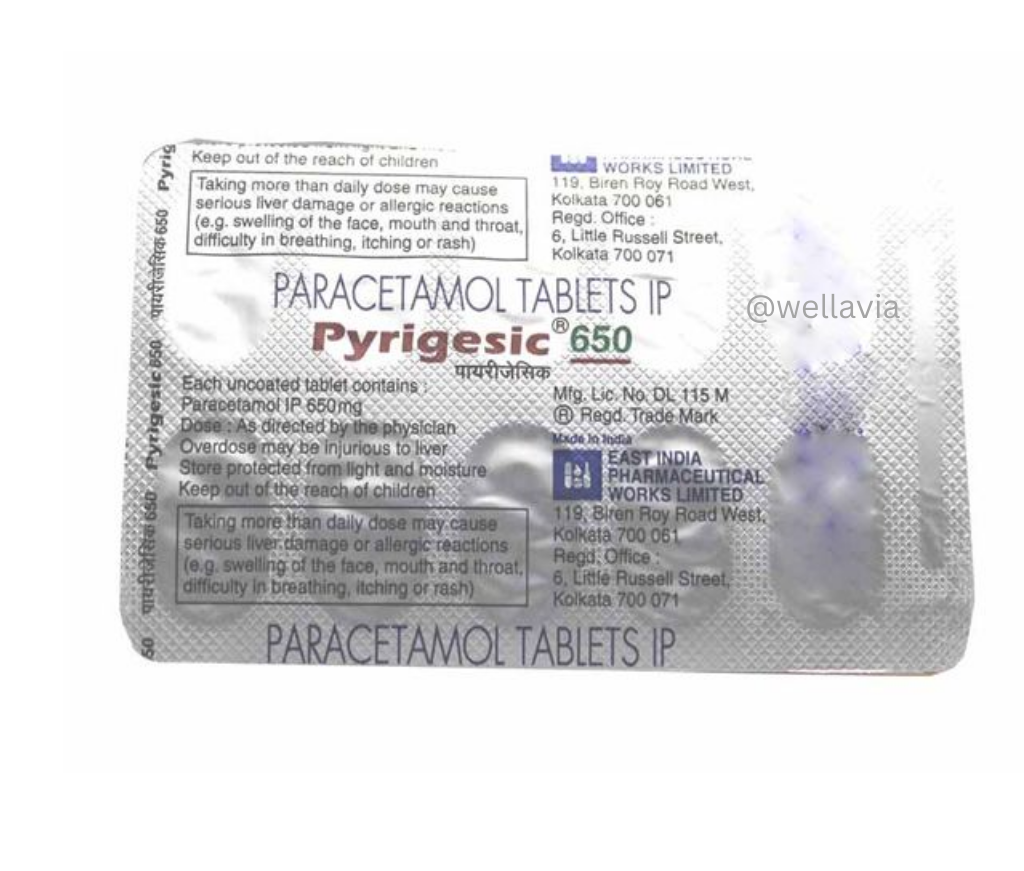
Pyrigesic 650mg Tablet 10 s
 Item requires a valid prescription
Manufactured By EAST INDIA PHARMACEUTICAL WORKS LTD
Composition Paracetamol / Acetaminophen(650.0 Mg)
Rs 26.99
MRP Rs 32.13
(16% OFF)
Includes all taxes
Package SIZE
( 1 Strip )

100% Authentic
Products

Free
Shipping*

Products
Return Policy
Available Substitutes
-
XT PARA 650 10s
TORRENT PHARMACEUTICAL LTD
Rs 15.50
31 % OFF Rs 22.46
Uses / Indications: It's always best to talk to your doctor or pharmacist before starting any new medication, including Pyrigesic 650mg tablets, to ensure it's safe for you and to discuss any potential interactions or side effects.
Drug Interactions
Other pain relievers/fever reducers: Taking Pyrigesic with other medications containing aspirin, ibuprofen, naproxen, or acetaminophen (paracetamol) can increase the risk of side effects like stomach upset and liver damage. Don't take them together unless your doctor tells you it's okay.
Warfarin (blood thinner): Pyrigesic can increase the effects of warfarin, increasing the risk of bleeding. Your doctor will need to monitor you carefully if you take both.
Methotrexate (cancer treatment/rheumatoid arthritis): Pyrigesic can increase the toxicity of methotrexate. Your doctor will need to closely monitor you if you are taking both medications.
Certain antibiotics: Some antibiotics can interact with Pyrigesic, potentially affecting how well either medicine works. Let your doctor or pharmacist know about all the medications you're taking.
Food and Lifestyle Interactions
Alcohol: Combining Pyrigesic with alcohol can increase the risk of stomach irritation and liver damage. Avoid alcohol while taking this medication.
Caffeine: Caffeine can increase the risk of stomach upset and nervousness when combined with Pyrigesic. Consider limiting your caffeine intake while taking this medicine.
Medical Conditions and Warnings
Liver disease: If you have liver disease, Pyrigesic may worsen your condition. Talk to your doctor before taking it.
Kidney disease: Pyrigesic is processed by the kidneys. If you have kidney problems, you may need a lower dose or a different medication. Discuss this with your doctor.
Allergies: If you are allergic to aspirin or other NSAIDs (nonsteroidal anti-inflammatory drugs), you may be allergic to Pyrigesic. Do not take it if you have a known allergy.
Stomach ulcers or bleeding: Pyrigesic can increase the risk of stomach ulcers and bleeding. If you have a history of these conditions, talk to your doctor before using this medicine.
Pregnancy and breastfeeding: It's important to talk to your doctor before taking Pyrigesic if you are pregnant, breastfeeding, or planning to become pregnant. The medicine may not be safe during pregnancy or breastfeeding.
Children: Always follow the dosage instructions carefully for children, as the appropriate dose may differ from adults. Consult a doctor or pharmacist for advice on children's dosages.
Remember, this is not an exhaustive list. Always consult your doctor or pharmacist if you have any questions or concerns about Pyrigesic or any other medication.
- Product composition:
- Paracetamol / Acetaminophen(650.0 Mg)
Drug Interactions
Other pain relievers/fever reducers: Taking Pyrigesic with other medications containing aspirin, ibuprofen, naproxen, or acetaminophen (paracetamol) can increase the risk of side effects like stomach upset and liver damage. Don't take them together unless your doctor tells you it's okay.
Warfarin (blood thinner): Pyrigesic can increase the effects of warfarin, increasing the risk of bleeding. Your doctor will need to monitor you carefully if you take both.
Methotrexate (cancer treatment/rheumatoid arthritis): Pyrigesic can increase the toxicity of methotrexate. Your doctor will need to closely monitor you if you are taking both medications.
Certain antibiotics: Some antibiotics can interact with Pyrigesic, potentially affecting how well either medicine works. Let your doctor or pharmacist know about all the medications you're taking.
Food and Lifestyle Interactions
Alcohol: Combining Pyrigesic with alcohol can increase the risk of stomach irritation and liver damage. Avoid alcohol while taking this medication.
Caffeine: Caffeine can increase the risk of stomach upset and nervousness when combined with Pyrigesic. Consider limiting your caffeine intake while taking this medicine.
Medical Conditions and Warnings
Liver disease: If you have liver disease, Pyrigesic may worsen your condition. Talk to your doctor before taking it.
Kidney disease: Pyrigesic is processed by the kidneys. If you have kidney problems, you may need a lower dose or a different medication. Discuss this with your doctor.
Allergies: If you are allergic to aspirin or other NSAIDs (nonsteroidal anti-inflammatory drugs), you may be allergic to Pyrigesic. Do not take it if you have a known allergy.
Stomach ulcers or bleeding: Pyrigesic can increase the risk of stomach ulcers and bleeding. If you have a history of these conditions, talk to your doctor before using this medicine.
Pregnancy and breastfeeding: It's important to talk to your doctor before taking Pyrigesic if you are pregnant, breastfeeding, or planning to become pregnant. The medicine may not be safe during pregnancy or breastfeeding.
Children: Always follow the dosage instructions carefully for children, as the appropriate dose may differ from adults. Consult a doctor or pharmacist for advice on children's dosages.
Remember, this is not an exhaustive list. Always consult your doctor or pharmacist if you have any questions or concerns about Pyrigesic or any other medication.
- Pregnancy interaction:
- Pyrigesic, containing paracetamol (acetaminophen), is a common pain and fever reliever. However, its use during pregnancy requires careful consideration and should always be under the supervision of a doctor. Self-medicating with Pyrigesic during pregnancy is strongly discouraged.
Safety: While generally considered relatively safe when taken as directed in low doses, the long-term effects of paracetamol on a developing fetus are not fully understood. High doses or prolonged use may pose potential risks.
Purpose: Pyrigesic may be prescribed by a doctor to manage mild to moderate pain or fever in pregnant individuals, only if the benefits outweigh the potential risks. This might include headaches, muscle aches, or fever associated with illness.
Medical Supervision: It is crucial to consult a doctor before taking Pyrigesic during pregnancy. The doctor will assess the risks and benefits based on the individual's health, gestational age, and the reason for needing pain relief. They will determine the appropriate dosage and duration of treatment, if any. The doctor can also suggest alternative pain management strategies if necessary.
Self-Medication Warning: Never self-medicate with Pyrigesic during pregnancy. Taking higher doses than recommended or using it for extended periods without medical guidance can be harmful to both the mother and the developing fetus.
- Expert advice:
- Expert Advice: Pyrigesic 650mg Tablets (10's)
Dosage: Always follow the prescribed dosage instructions exactly. Do not exceed the recommended dose, even if symptoms persist. If unsure, consult your doctor or pharmacist.
Timing: Take the tablets with a full glass of water, preferably with food, to minimize stomach upset. Follow your doctor's instructions regarding the frequency of intake (e.g., every 4-6 hours).
Duration of Use: Do not use Pyrigesic for longer than recommended by your doctor. Prolonged use can lead to adverse effects.
Hydration: Maintain adequate fluid intake while taking Pyrigesic, especially if you have a fever. Dehydration can worsen symptoms.
Other Medications: Inform your doctor or pharmacist about all other medications you are taking, including over-the-counter drugs and herbal remedies. Some medications may interact with Pyrigesic.
Allergies: If you have a known allergy to paracetamol (acetaminophen) or any other component of Pyrigesic, do not take this medication.
Liver Function: Pyrigesic should be used with caution in individuals with liver disease. Excessive use can damage the liver. Monitor for signs of liver problems such as jaundice (yellowing of skin or eyes) or dark urine.
Alcohol Consumption: Avoid alcohol consumption while taking Pyrigesic as it can increase the risk of liver damage.
Pregnancy and Breastfeeding: Consult your doctor before taking Pyrigesic if you are pregnant, breastfeeding, or planning to become pregnant.
Children: Follow the specific dosage recommendations for children, if applicable. Never exceed the recommended dose for children.
Missed Dose: If you miss a dose, take it as soon as you remember, unless it is almost time for your next dose. Do not double the dose.
Seek Medical Attention: If symptoms worsen or persist despite taking Pyrigesic, or if you experience any unusual side effects (e.g., rash, swelling, difficulty breathing), seek immediate medical attention.
Storage: Store Pyrigesic in a cool, dry place, away from direct sunlight and out of reach of children.
This information is for general guidance only and does not replace professional medical advice. Always consult your doctor or pharmacist before starting any new medication.
- Side Effects:
- Pyrigesic 650mg tablets, like all medications, can cause side effects, although not everyone experiences them.
Common Side Effects:
Upset stomach
Nausea
Heartburn
Dizziness
Mild headache
Serious Side Effects that require medical attention:
Severe allergic reactions (e.g., rash, swelling of the face, lips, tongue, or throat, difficulty breathing)
Black, tarry stools
Bloody or coffee-ground-like vomit
Jaundice (yellowing of the skin or eyes)
Unusual bruising or bleeding
Severe or persistent stomach pain
Ringing in the ears
Sudden hearing loss
Changes in vision
Note: This is not an exhaustive list of all possible side effects. If you experience any other unusual symptoms, contact your doctor or pharmacist immediately.
- How to use:
- Dosage: Take one Pyrigesic 650mg tablet as directed by your doctor. Do not exceed the recommended dose.
Timing: Take the tablet with a glass of water. You can take it with or without food.
Swallowing: Swallow the tablet whole. Do not chew or crush it.
Missed Dose: If you miss a dose, take it as soon as you remember, unless it is almost time for your next dose. Do not take a double dose to make up for a missed one.
Storage: Store the tablets in a cool, dry place, away from direct sunlight and moisture. Keep out of reach of children.
Seek Medical Advice: If your symptoms persist or worsen, consult your doctor or pharmacist. This information is not a substitute for professional medical advice. Always follow your doctor's instructions.
- How it works:
- Pyrigesic 650mg tablets help relieve pain and fever.
Paracetamol (Acetaminophen): This is the main active ingredient in Pyrigesic. It works by reducing the production of prostaglandins in your brain and spinal cord. Prostaglandins are substances that cause pain and fever. By lowering prostaglandin levels, paracetamol helps to reduce your fever and ease your aches and pains. It's important to note that it doesn't reduce inflammation directly like some other pain relievers.
No other active ingredients are listed in the provided name "Pyrigesic 650mg". The 650mg refers to the amount of paracetamol in each tablet. If there are other ingredients listed on your packaging, please refer to that information or ask your pharmacist or doctor for clarification.
In short, Pyrigesic works by targeting the source of pain and fever in your body, specifically by reducing the production of substances that trigger these sensations.
- Faq for medicine:
- What is Pyrigesic 650mg used for?
Pyrigesic 650mg tablets contain paracetamol, which is a pain reliever and fever reducer. It's used to treat mild to moderate pain, such as headaches, muscle aches, and toothaches, and to reduce fever.
How should I take Pyrigesic 650mg?
Follow the dosage instructions on the label or as directed by your doctor or pharmacist. Generally, adults take one or two tablets every 4-6 hours as needed, but do not exceed the maximum daily dose. Always take the tablets with a glass of water.
What are the common side effects of Pyrigesic 650mg?
While generally safe, some people may experience mild side effects such as nausea, vomiting, or stomach upset. Rarely, more serious allergic reactions can occur. If you experience any unusual or concerning side effects, stop taking the medicine and contact your doctor immediately.
What should I do if I miss a dose of Pyrigesic 650mg?
If you miss a dose, take it as soon as you remember, unless it's almost time for your next dose. Do not take a double dose to make up for a missed one.
Are there any precautions I should take when using Pyrigesic 650mg?
Do not exceed the recommended dose. If you have liver or kidney problems, or are taking other medications, talk to your doctor or pharmacist before taking Pyrigesic 650mg. Do not take it with alcohol. If your pain or fever persists for more than a few days, consult a doctor.
Can I take Pyrigesic 650mg with other medications?
It's important to inform your doctor or pharmacist of all other medications you are taking, including over-the-counter drugs and herbal remedies, before taking Pyrigesic 650mg. Some medications may interact with paracetamol.
- Medicine interaction:
- It's very important to tell your doctor about all the medicines, vitamins, supplements, and even herbal remedies you're taking, including over-the-counter drugs like Pyrigesic (which contains paracetamol, also known as acetaminophen). This is because some medications can interact with each other, sometimes causing unexpected or harmful effects. Even seemingly harmless substances can affect how your body processes Pyrigesic.
Here are some examples of drug classes or substances that may interact with Pyrigesic:
Warfarin (and other blood thinners): Long-term or high-dose use of paracetamol with warfarin can increase the risk of bleeding. This is because paracetamol can affect how the liver processes warfarin.
Alcohol: Combining paracetamol with alcohol can increase the risk of liver damage, especially with regular or excessive alcohol consumption. This is because both substances are processed by the liver, and the combined load can overwhelm it.
Other pain relievers/fever reducers: Taking Pyrigesic with other medications containing paracetamol (acetaminophen) or ibuprofen significantly increases the risk of exceeding the safe dose of paracetamol, leading to liver damage. Always check the labels of all your medications.
Certain anticonvulsants (e.g., phenytoin, carbamazepine): These drugs can speed up the breakdown of paracetamol, potentially reducing its effectiveness.
Drugs that affect the liver: Many medications are processed by the liver. If you are taking other drugs that affect liver function, taking Pyrigesic may increase the risk of liver damage. Your doctor will need to assess this risk.
Some herbal remedies: Certain herbal remedies, especially those affecting the liver, could potentially interact with Pyrigesic. Always disclose any herbal supplements to your doctor.
This list is not exhaustive, and other interactions are possible. Always consult your doctor or pharmacist before taking Pyrigesic if you are on any other medication or supplement.