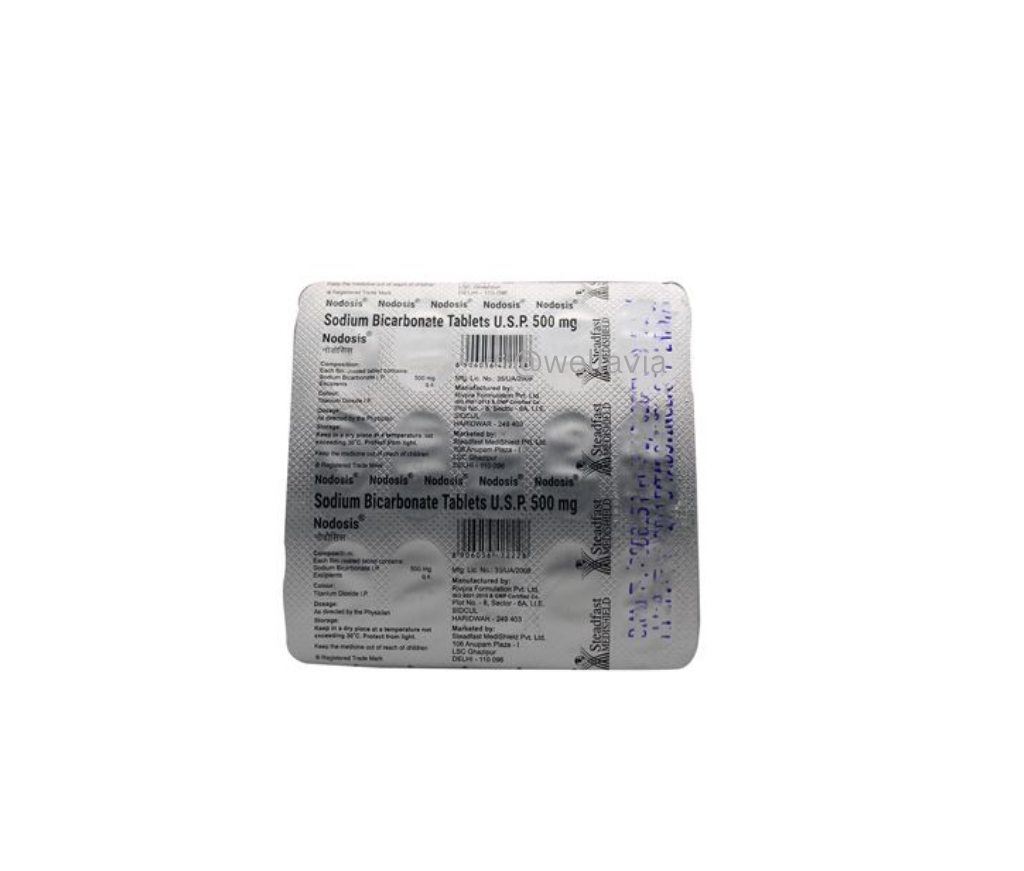
Nodosis Tablet 15 S
 Item requires a valid prescription
Manufactured By STEADFAST MEDISHIELD PVT LTD
Composition Sodium Bicarbonate (500mg)
Rs 53.44
Includes all taxes
Package SIZE
( 1 Strip )

100% Authentic
Products

Free
Shipping*

Products
Return Policy
Available Substitutes
Uses / Indications: Before starting Nodosis Tablet-15, it is important to consult your doctor and inform them of all medicines you are taking, your dietary habits, and any medical conditions you have to avoid potential problems.
Drug Interactions
- Take Nodosis Tablet at least 1-2 hours apart from other medicines like antacids, aspirin, ketoconazole, benzodiazepines, methotrexate, quinidine, sulfonamide antibiotics, tetracycline, iron supplements, and lithium. This helps prevent these drugs from interfering with each other's absorption or effectiveness.
- Avoid taking calcium supplements along with Nodosis Tablet as they may reduce each other’s effectiveness.
- Inform your doctor if you use any over-the-counter or herbal products since they might interact with Nodosis Tablet.
- Do not take more medicine than prescribed and avoid missing doses to maintain proper treatment.
Food and Lifestyle Interactions
- Avoid alcohol while on Nodosis Tablet because alcohol can worsen acidity and heartburn symptoms.
- Take the tablet on an empty stomach, ideally 1 to 2 hours after meals, but not on an overly full stomach to ensure best effect and reduce stomach discomfort.
- Dissolve the tablet completely in water before swallowing to minimize stomach irritation.
- Manage your sodium intake carefully as Nodosis contains sodium bicarbonate, which might affect blood pressure and kidney function.
- Avoid long-term or excessive use of Nodosis Tablet without your doctor’s supervision to prevent potential rebound acidity or other side effects.
Medical Conditions and Warnings
- Do not use if you have signs of appendicitis or inflammation in the bowel (symptoms can include lower abdominal pain, cramping, bloating, nausea, vomiting).
- People with heart disease, high blood pressure, kidney problems, or swelling in the body should use this medication only under close medical supervision.
- Pregnant or breastfeeding women should avoid Nodosis Tablet unless explicitly prescribed and monitored by a physician, as it may cause side effects.
- Watch for side effects such as swelling, unusual weakness, or changes in potassium levels in your blood, and report these to your doctor.
- Store the medication in a cool, dry place away from children and do not use it past its expiration date.
Following these precautions will help you use Nodosis Tablet safely and effectively. Always talk to your healthcare provider if you experience any unexpected symptoms or have questions about your medication.
- Product composition:
- Sodium Bicarbonate (500mg)
Drug Interactions
- Take Nodosis Tablet at least 1-2 hours apart from other medicines like antacids, aspirin, ketoconazole, benzodiazepines, methotrexate, quinidine, sulfonamide antibiotics, tetracycline, iron supplements, and lithium. This helps prevent these drugs from interfering with each other's absorption or effectiveness.
- Avoid taking calcium supplements along with Nodosis Tablet as they may reduce each other’s effectiveness.
- Inform your doctor if you use any over-the-counter or herbal products since they might interact with Nodosis Tablet.
- Do not take more medicine than prescribed and avoid missing doses to maintain proper treatment.
Food and Lifestyle Interactions
- Avoid alcohol while on Nodosis Tablet because alcohol can worsen acidity and heartburn symptoms.
- Take the tablet on an empty stomach, ideally 1 to 2 hours after meals, but not on an overly full stomach to ensure best effect and reduce stomach discomfort.
- Dissolve the tablet completely in water before swallowing to minimize stomach irritation.
- Manage your sodium intake carefully as Nodosis contains sodium bicarbonate, which might affect blood pressure and kidney function.
- Avoid long-term or excessive use of Nodosis Tablet without your doctor’s supervision to prevent potential rebound acidity or other side effects.
Medical Conditions and Warnings
- Do not use if you have signs of appendicitis or inflammation in the bowel (symptoms can include lower abdominal pain, cramping, bloating, nausea, vomiting).
- People with heart disease, high blood pressure, kidney problems, or swelling in the body should use this medication only under close medical supervision.
- Pregnant or breastfeeding women should avoid Nodosis Tablet unless explicitly prescribed and monitored by a physician, as it may cause side effects.
- Watch for side effects such as swelling, unusual weakness, or changes in potassium levels in your blood, and report these to your doctor.
- Store the medication in a cool, dry place away from children and do not use it past its expiration date.
Following these precautions will help you use Nodosis Tablet safely and effectively. Always talk to your healthcare provider if you experience any unexpected symptoms or have questions about your medication.
- Pregnancy interaction:
- Nodosis Tablet-15, which primarily contains sodium bicarbonate, is used mainly as an antacid to provide temporary relief from heartburn, acid indigestion, and upset stomach. Its use during pregnancy requires caution due to potential risks to the developing baby and the need for medical supervision.
- Safety during pregnancy: Nodosis Tablet-15 is generally considered unsafe or potentially harmful for use during pregnancy, as animal and limited human studies suggest it might affect the developing fetus. Pregnant women should not take it without explicit medical advice.
- Purpose: It helps neutralize stomach acid to relieve symptoms like acid reflux and heartburn, which can be common during pregnancy but should not be treated without professional guidance.
- Medical supervision importance: Since symptoms of acidity may indicate underlying conditions, and because of potential side effects and sodium content (which can affect blood pressure and fluid balance), pregnant women must consult their doctor before using Nodosis. The doctor will weigh the benefits against possible risks and monitor any side effects.
- Breastfeeding caution: Similar caution applies when breastfeeding, as the drug might cause serious side effects in nursing women without professional oversight.
- Potential side effects: Effects can include bloating, nausea, increased thirst, and possible interactions with other medications or existing conditions like kidney or heart disease, which require dosage adjustments under medical supervision.
- Avoid self-medication: Pregnant women should avoid self-medicating with Nodosis Tablet-15; always follow a healthcare provider’s prescription and advice to ensure safety for both mother and baby.
In summary, Nodosis Tablet-15 should only be used during pregnancy under doctor supervision, focusing on careful assessment of risks and benefits.
- Expert advice:
- - Take Nodosis Tablet 15 (500mg) exactly as prescribed by your doctor, typically 3 times daily, either with or without food, to effectively relieve heartburn, acid indigestion, and upset stomach.
- Do not exceed the recommended dose or use the tablet for more than 2 weeks without medical advice, as prolonged use can lead to electrolyte imbalances such as alkalosis or hypokalemia.
- Swallow the tablet whole; do not crush or chew it to ensure proper action and reduce side effects.
- Avoid taking Nodosis if you are pregnant or breastfeeding without consulting your doctor, as it may cause moderate to serious side effects in these conditions.
- Inform your doctor if you have any pre-existing conditions such as high blood pressure, kidney, liver, or heart disease, or if you are on a salt-restricted diet, since the medicine contains sodium that can exacerbate these issues.
- Notify your healthcare provider about all other medications and supplements you are taking to avoid potential drug interactions.
- Watch for side effects such as increased thirst, bloating, nausea, or loss of appetite, and report them to your doctor if they worsen or persist.
- Maintain a lifestyle that supports digestive health: eat smaller, more frequent meals; avoid spicy, acidic, or fatty foods; and avoid lying down immediately after eating to reduce acidity.
- Store the medicine in its original container, below 25°C, away from moisture and out of reach of children and pets.
- If you experience recurring or severe acidity despite treatment, seek medical evaluation to determine the underlying cause rather than self-medicating.
- Side Effects:
- Nodosis Tablet is used to treat indigestion, metabolic acidosis, and acts as an alkalinizing agent. Like all medicines, it may cause some side effects, which can range from mild to serious.
Common Side Effects:
- Increased sodium level in the blood
- Alkalosis (a condition where the body fluids have excess base)
- Decreased potassium level in the blood
- Flatulence (gas)
- Abdominal pain or stomach cramps
- Muscle ache
- Loss of appetite
- Altered taste
- Peripheral edema (swelling in limbs)
Serious Side Effects that require medical attention:
- Brain swelling (cerebral edema)
- Seizures
- Tetany (muscle spasms or cramps)
- Tremors
- Allergic reactions such as rash, hives, itching, or peeling skin
- Fluid retention in the lungs
- Injection site reactions if administered via injection (pain, swelling, redness)
- Lactic acidosis (build-up of lactic acid in the body)
If you experience any serious side effects or signs of allergic reaction, seek medical help immediately. Always consult your doctor for any persistent or worsening side effects before making any changes to your medication.
- How to use:
- - Take Nodosis Tablet exactly as prescribed by your doctor, following the recommended dose and duration.
- Swallow the tablet whole with a sufficient amount of water; do not chew, crush, or break it.
- It is best to take the tablet 1 to 2 hours after food; avoid taking it on an overly full stomach.
- If you miss a dose, take it as soon as you remember, unless it is almost time for your next dose. In that case, skip the missed dose and continue your regular schedule. Do not take a double dose to make up for a missed one.
- Store the tablets in a cool, dry place below 30°C, away from direct sunlight, moisture, and heat. Keep out of reach of children and pets.
- Do not use expired or damaged tablets and dispose of unused medicine properly—do not flush it down the toilet or drain.
- If you take more than the prescribed dose accidentally, contact your doctor or visit the hospital immediately.
- Continue taking the medicine for the full duration prescribed by your doctor to avoid symptom recurrence or worsening of your condition.
- Consult your doctor before using Nodosis Tablet if you have stomach, kidney, liver, or heart conditions, or if you are pregnant or breastfeeding.
- Inform your doctor about all other medications you are taking, as Nodosis Tablet can interact with certain drugs and should be spaced at least two hours apart from some medicines like antibiotics, aspirin, or iron supplements.
- How it works:
- Nodosis Tablet mainly works by neutralizing excess acid in the body to relieve symptoms such as heartburn and indigestion, and to correct imbalance when the body or blood becomes too acidic.
Here is how its key active ingredient works:
- Sodium Bicarbonate: This is the main component that acts as an antacid. It works by releasing bicarbonate ions which neutralize excess stomach acid, reducing irritation and discomfort.
- When sodium bicarbonate reacts with stomach acid (hydrochloric acid), it produces carbon dioxide gas and water. This neutralizes the acid and increases the pH (makes it less acidic) in the stomach, helping to relieve heartburn and indigestion.
- Sodium bicarbonate also enters the bloodstream and helps balance blood pH by reducing acidity (metabolic acidosis). It acts as a systemic alkalizer to restore the normal acid-base balance in the body.
- Additionally, it increases the pH of urine, which helps in eliminating certain toxins and improving kidney function.
Together, these actions reduce acidity and discomfort in the stomach, correct acid-base imbalances in the blood, and support the removal of toxic substances, thereby improving overall symptoms related to excess acid or metabolic acidosis. The medicine should be taken under medical guidance to avoid side effects from altering the body’s electrolyte and acid-base balance.
- Faq for medicine:
- What is Nodosis Tablet-15 used for?
Nodosis Tablet-15 is mainly used to relieve heartburn, indigestion, acid reflux symptoms, and excess stomach acid. It also helps to correct metabolic acidosis by neutralizing acid in the stomach and blood.
How should I take Nodosis Tablet-15?
You can take Nodosis Tablet-15 with or without food, typically 1 to 2 hours after meals. Swallow it whole with a glass of water. Do not cut, break, or chew the tablet. Follow your doctor's prescribed dose and schedule strictly.
What are the common side effects of Nodosis Tablet-15?
Some common side effects include high sodium levels, alkalosis (too much base in the body), low potassium levels, and in rare cases cerebral edema (brain swelling). Contact your doctor if you notice any unusual or persistent symptoms.
What should I do if I miss a dose of Nodosis Tablet-15?
Take the missed dose as soon as you remember, unless it is almost time for your next dose. Do not double the dose to make up for the missed one. If in doubt, consult your doctor.
Are there any important precautions to be aware of before taking Nodosis Tablet-15?
Inform your doctor if you have any kidney or stomach diseases, are on a low-salt diet, or are pregnant or breastfeeding. Also, disclose all other medications you are using, as Nodosis can interact with them. Do not use this medicine for more than two weeks without medical advice.
Can I use Nodosis Tablet-15 if I have heart or kidney problems?
You should consult your doctor before using Nodosis Tablet-15 if you have heart disease, kidney problems, high blood pressure, or swelling in the body, as it may worsen these conditions.
- Medicine interaction:
- It is very important to inform your doctor about all the medications, supplements, and foods you are taking before starting Nodosis Tablet-15 to avoid any harmful interactions and ensure safe treatment.
Potential medicine and food interactions for Nodosis Tablet-15 include:
- Antacids: Taking other antacids with Nodosis may reduce the absorption or effectiveness of either medicine. A gap of at least two hours is recommended.
- Aspirin: Nodosis can interfere with aspirin absorption, so take them at least two hours apart.
- Ketoconazole (antifungal): Nodosis may reduce ketoconazole absorption, making it less effective if taken together.
- Benzodiazepines (sedatives): Their absorption can be affected by Nodosis. Maintain a 2-hour gap when taking these.
- Methotrexate (chemotherapy/immunosuppressant): Interaction may increase side effects or reduce effectiveness; separate dosing times are advised.
- Quinidine (antiarrhythmic): Nodosis may reduce quinidine absorption if taken simultaneously.
- Sulfonamide antibiotics: Absorption may be decreased when taken with Nodosis; take with a time gap.
- Tetracycline antibiotics: Nodosis reduces tetracycline absorption; take them at least 1-2 hours apart.
- Iron preparations: Nodosis can interfere with iron absorption; separate doses by at least two hours.
- Lithium: Nodosis may affect lithium levels, requiring monitoring and timing adjustments.
- Calcium supplements: Avoid taking calcium supplements simultaneously as they may form insoluble complexes affecting absorption.
- Acidic foods and beverages: Avoid taking Nodosis with acidic items (like citrus fruits, carbonated drinks) as they may reduce the medicine's effectiveness.
- Large or overly full meals: Avoid taking Nodosis on a very full stomach; it should be taken at least 1-2 hours after meals for better action.
- Sodium intake considerations: Since Nodosis contains sodium bicarbonate, people on a salt-restricted diet, or with high blood pressure, kidney, liver, or heart problems should consult their doctor before use.
To minimize risks and promote safe use, take Nodosis at least 1 to 2 hours before or after other medications and meals as advised by your healthcare provider.