
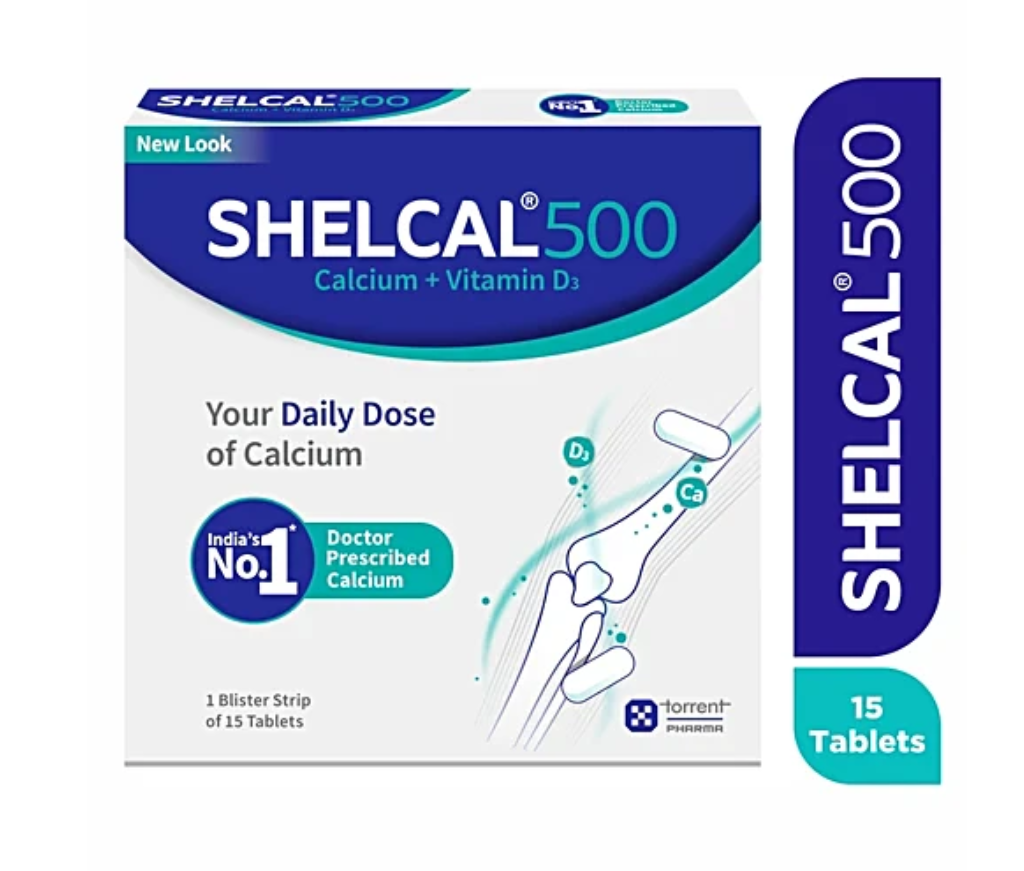
Shelcal 500mg Tablet 15s
 Item requires a valid prescription
Manufactured By TORRENT PHARMACEUTICALS LTD
Composition Calcium(500mg),Vitamin D3(250iu)
Rs 148.65
Includes all taxes
Package SIZE
( 1 Strip )

100% Authentic
Products

Free
Shipping*

Products
Return Policy
Available Substitutes
Shelcal 500mg Tablet 15s is a calcium supplement containing 500mg of elemental calcium per tablet, primarily used to support bone health and help prevent or treat conditions associated with calcium deficiency, such as osteoporosis. It aids in maintaining strong bones and teeth. Always consult your doctor or pharmacist before starting Shelcal 500mg or any other supplement to ensure it's appropriate for your individual needs and health condition.
Uses / Indications: It's always best to talk to your doctor or pharmacist before starting Shelcal 500mg tablets, especially if you have other health conditions or are taking other medications.
Drug Interactions:
Tetracyclines (e.g., doxycycline, minocycline): Taking Shelcal (which contains calcium) with tetracyclines can reduce the absorption of the tetracycline antibiotic, making it less effective. It's important to separate the timing of taking these medications by several hours.
Thyroid medications (e.g., levothyroxine): Calcium can interfere with the absorption of thyroid medications. Take these medications at least 4 hours apart from Shelcal.
Bisphosphonates (e.g., alendronate, risedronate): These medications are used to treat osteoporosis. Taking them close to Shelcal can reduce their effectiveness. Take these medications at least 2 hours apart from Shelcal.
Digoxin: Calcium can increase the risk of digoxin toxicity. Your doctor will monitor you closely if you are taking both medications.
Some diuretics (water pills): The combination of calcium supplements and certain diuretics may increase the risk of high calcium levels in the blood.
Food and Lifestyle Interactions:
High-oxalate foods (e.g., spinach, rhubarb): Calcium can bind to oxalates, potentially increasing the risk of kidney stones in susceptible individuals. While you don't need to eliminate these foods entirely, be mindful of your intake, especially if you have a history of kidney stones.
High-fat meals: High-fat meals may reduce the absorption of calcium.
Alcohol: Excessive alcohol consumption can interfere with calcium absorption and increase the risk of osteoporosis.
Medical Conditions and Warnings:
Kidney stones: If you have a history of kidney stones, talk to your doctor before taking Shelcal, as it may increase your risk.
Hypercalcemia (high blood calcium): Shelcal should be used cautiously in people with high blood calcium levels. Your doctor will monitor your calcium levels regularly.
Hyperparathyroidism: This condition involves overproduction of parathyroid hormone, leading to high blood calcium. Shelcal is generally not recommended for people with this condition.
Sarcoidosis: This disease can cause high blood calcium levels, and Shelcal should be used with caution in individuals with sarcoidosis.
Kidney disease: People with kidney disease should use Shelcal with caution, as the kidneys play a crucial role in calcium regulation. Your doctor may need to adjust your dose or monitor you more closely.
Remember, this information is not a substitute for professional medical advice. Always consult your doctor or pharmacist before starting any new medication, including Shelcal.
- Product composition:
- Calcium(500mg),Vitamin D3(250iu)
- Pregnancy interaction:
- Shelcal 500mg tablets, containing calcium carbonate, are a calcium supplement. Their use during pregnancy requires careful consideration and should always be under the guidance of a doctor. Self-medicating with calcium supplements during pregnancy is strongly discouraged.
Safety: The safety of Shelcal 500mg during pregnancy depends entirely on individual circumstances and the dosage prescribed by a physician. While calcium is essential for fetal development, excessive intake can have potential adverse effects. A doctor will assess the mother's existing calcium levels and overall health before recommending this supplement.
Purpose: A doctor might prescribe Shelcal 500mg to pregnant women if they have a calcium deficiency or are at risk of developing one. This deficiency can negatively impact both the mother's and the baby's health. Adequate calcium is crucial for bone development in the fetus and maintaining the mother's bone health.
Medical Supervision: This is paramount. A doctor will determine the necessity of Shelcal 500mg, prescribe the appropriate dosage, and monitor the mother's health throughout the supplementation period. They can also address any potential side effects and ensure the supplement doesn't interfere with other medications the mother might be taking. Ignoring medical advice and self-prescribing can lead to complications.
- Expert advice:
- Expert Advice: Shelcal 500mg Tablet (Calcium Carbonate)
Dosage: Always follow your doctor's prescribed dosage. Do not exceed the recommended amount. Take the tablets with a full glass of water, preferably with food, to minimize stomach upset.
Timing: Consistency is key. Take your Shelcal at the same time each day to maintain consistent calcium levels.
Absorption: Avoid taking Shelcal with foods high in oxalates (spinach, rhubarb) or phytates (legumes, whole grains) as these can interfere with calcium absorption. Separate intake by at least 2 hours.
Medication Interactions: Inform your doctor about all other medications you are taking, including over-the-counter drugs and supplements, as Shelcal may interact with some medications. This is especially important with tetracyclines, thyroid hormones, and certain diuretics.
Kidney Stones: If you have a history of kidney stones, discuss the use of Shelcal with your doctor. High calcium intake can increase the risk in susceptible individuals.
Constipation: Shelcal can cause constipation in some individuals. Increase your fluid intake and fiber consumption to mitigate this risk. Regular exercise also helps.
Hypercalcemia: Be aware of symptoms of hypercalcemia (high blood calcium) such as nausea, vomiting, constipation, fatigue, and frequent urination. Report any of these symptoms to your doctor immediately.
Underlying Conditions: Shelcal is not a substitute for a healthy diet and lifestyle. If you have underlying medical conditions, such as hyperparathyroidism or kidney disease, consult your doctor before using Shelcal.
Pregnancy and Breastfeeding: Consult your doctor before using Shelcal if you are pregnant, breastfeeding, or planning to become pregnant.
Storage: Store Shelcal in a cool, dry place, away from direct sunlight and moisture. Keep it out of reach of children.
Missed Dose: If you miss a dose, take it as soon as you remember, unless it is almost time for your next dose. Do not double the dose to make up for a missed one.
Regular Check-ups: Regular blood tests may be necessary to monitor your calcium levels while taking Shelcal. Follow your doctor's recommendations for monitoring.
This information is for general guidance only and does not replace professional medical advice. Always consult your doctor or pharmacist before starting any new medication.
- Side Effects:
- Shelcal 500mg tablets, like most medications, can cause some side effects, although not everyone experiences them.
Common Side Effects:
Upset stomach
Nausea
Diarrhea
Constipation
Heartburn
Serious Side Effects that require medical attention:
Severe allergic reactions (such as rash, swelling of the face, lips, tongue, or throat, difficulty breathing)
Severe stomach pain
Bloody or black stools
Vomiting blood
Jaundice (yellowing of the skin or eyes)
If you experience any of these side effects, especially the serious ones, stop taking Shelcal and contact your doctor immediately.
- How to use:
- How To Use Shelcal 500mg Tablet 15s:
Take the tablet as prescribed by your doctor. Do not change the dose or stop taking the medication without consulting your doctor.
Swallow the tablet whole with a glass of water. Do not chew or crush the tablet.
The best time to take Shelcal 500mg is usually with food. This helps to reduce any potential stomach upset. Follow your doctor's specific instructions.
If you miss a dose, take it as soon as you remember, unless it is almost time for your next dose. Do not take a double dose to make up for a missed one.
Store the tablets in a cool, dry place, away from direct sunlight and moisture. Keep them out of reach of children.
If you experience any side effects, such as stomach upset or allergic reactions, contact your doctor immediately.
This information is for guidance only. Always follow your doctor's or pharmacist's instructions. They can provide personalized advice based on your specific health needs.
- How it works:
- Shelcal 500mg tablets are used to treat or prevent calcium deficiency in the body.
Calcium Carbonate (500mg): This is the main ingredient. Calcium is a vital mineral for many bodily functions, including strong bones and teeth, muscle function, nerve transmission, and blood clotting. Shelcal provides calcium in a form your body can easily absorb.
Collectively: The calcium carbonate in Shelcal helps to increase the level of calcium in your blood if it's low, or helps maintain healthy calcium levels if you're at risk of deficiency. This is crucial for maintaining healthy bones and preventing conditions like osteoporosis.
It's important to note that this explanation is simplified. Always consult your doctor or pharmacist if you have any questions or concerns about your medication.
- Faq for medicine:
- What is Shelcal 500mg Tablet used for?
Shelcal 500mg contains calcium carbonate, which is used to treat or prevent low blood calcium levels. It's also sometimes used to treat or prevent conditions caused by low calcium such as osteoporosis. Always follow your doctor's instructions.
How should I take Shelcal 500mg Tablet?
Take Shelcal 500mg exactly as prescribed by your doctor. Usually, it's taken with a glass of water. Do not crush or chew the tablets. Your doctor will tell you how many tablets to take and how often.
What are the common side effects of Shelcal 500mg Tablet?
Common side effects can include constipation, nausea, stomach upset, and gas. These are usually mild and temporary. If you experience any severe or persistent side effects, contact your doctor immediately.
What should I do if I miss a dose of Shelcal 500mg Tablet?
If you miss a dose, take it as soon as you remember, unless it's almost time for your next dose. Do not take a double dose to make up for a missed one.
Are there any precautions I should take while using Shelcal 500mg Tablet?
Tell your doctor about all your medical conditions, especially kidney problems, before taking Shelcal 500mg. Also inform your doctor about all other medications you are taking, as some medications may interact with Shelcal. It's important to drink plenty of fluids while taking this medication to help prevent constipation.
Should I take Shelcal 500mg with food?
Taking Shelcal with food or milk can help reduce stomach upset. However, always follow your doctor's instructions regarding when to take your medication.
- Medicine interaction:
- It's crucial to tell your doctor about all the medications, vitamins, supplements, and even herbal remedies you're taking, including Shelcal 500mg. This is because some substances can interact with Shelcal, potentially affecting how well it works or increasing the risk of side effects. Shelcal contains calcium, and calcium supplements can interact with several other medications. Here are some examples:
Tetracyclines (e.g., doxycycline, minocycline): Calcium can reduce the absorption of tetracycline antibiotics, making them less effective. This means the antibiotics might not be able to fight off the infection properly.
Thyroid medications (e.g., levothyroxine): Calcium can interfere with the absorption of thyroid hormones. This could lead to your thyroid medication being less effective. Taking them several hours apart can help minimize this interaction.
Bisphosphonates (e.g., alendronate, risedronate): These medications are used to treat osteoporosis. Taking them too close to calcium supplements can reduce their effectiveness. It's important to follow specific timing instructions given by your doctor for taking these medications.
Certain heart medications (e.g., digoxin): High calcium levels can potentially interact with some heart medications, potentially affecting their effectiveness or increasing the risk of side effects. Your doctor should monitor you carefully if you're taking both.
Iron supplements: Calcium can interfere with the absorption of iron. Taking them at different times of the day may be recommended.
Some diuretics (water pills): The interaction between calcium and some diuretics isn't fully understood, but there's potential for some impact on calcium levels or the effectiveness of the diuretic. Your doctor will monitor you for any potential problems.
High levels of oxalates (found in spinach, rhubarb, etc.): While not a medication, high dietary intake of oxalates can bind with calcium, potentially reducing its absorption. This interaction is more relevant with very high oxalate consumption.
This list is not exhaustive. Always consult your doctor or pharmacist if you have any concerns about potential interactions between Shelcal and other medications or foods you are consuming.