
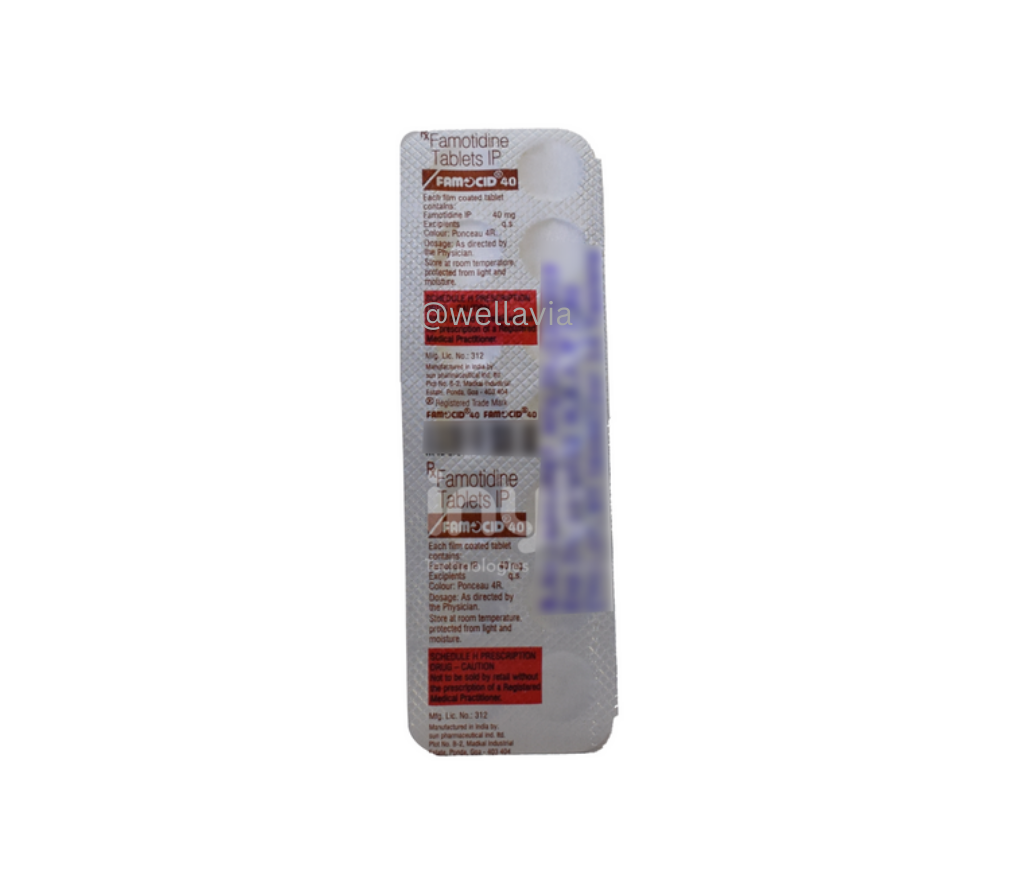
Famocid 40 Tablet 14 S
 Item requires a valid prescription
Manufactured By SUN PHARMACEUTICAL INDUSTRIES LTD
Composition Famotidine(40.0 Mg)
Rs 11.72
Includes all taxes
Package SIZE
( 1 Strip )

100% Authentic
Products

Free
Shipping*

Products
Return Policy
Available Substitutes
Uses / Indications: Before taking Famocid 40 Tablet, always consult your doctor or healthcare provider to discuss any potential interactions or warnings related to your specific health situation.
Drug Interactions
- Famocid may interact with certain medications, including muscle relaxants like tizanidine, cancer treatments such as dasatinib and erlotinib, some antifungal drugs like itraconazole and ketoconazole, and HIV or hepatitis C medications. These interactions can affect how well either drug works or increase side effects.
- Combining Famocid with other stomach acid reducers, such as proton pump inhibitors (e.g., omeprazole) or other H2 blockers (e.g., cimetidine), may affect how well the medications work together.
- Some antibiotics and drugs like cyclosporine or digoxin can have altered effectiveness when taken with Famocid.
- Inform your healthcare provider about all prescription, over-the-counter medicines, supplements, and herbal products you use to avoid unexpected interactions.
Food and Lifestyle Interactions
- There are no known direct interactions between Famocid and food or drinks, so it can generally be taken with or without meals.
- The effect of alcohol on Famocid is unclear, but alcohol may worsen stomach symptoms that Famocid is used to treat, so check with your doctor before drinking while using this medicine.
- Tobacco use has no specific known interaction with Famocid, but quitting smoking is beneficial for overall digestive health.
Medical Conditions and Warnings
- Tell your doctor if you have kidney problems, especially moderate to severe kidney disease, as Famocid may stay in your body longer and increase side effects.
- Inform your healthcare provider if you have any allergies to famotidine or related medicines (such as cimetidine or ranitidine) to avoid allergic reactions.
- If you experience symptoms like rash, itching, swelling (especially of the face, throat, tongue, lips), difficulty breathing or swallowing, seek medical attention immediately.
- Discuss with your doctor if you are pregnant, planning to become pregnant, or breastfeeding, to ensure Famocid is safe for you.
- Let your doctor know if you have phenylketonuria (PKU) or swallowing difficulties before starting Famocid.
Following these guidelines and communicating openly with your healthcare provider will help ensure Famocid works safely and effectively for you.
- Product composition:
- Famotidine(40.0 Mg)
Drug Interactions
- Famocid may interact with certain medications, including muscle relaxants like tizanidine, cancer treatments such as dasatinib and erlotinib, some antifungal drugs like itraconazole and ketoconazole, and HIV or hepatitis C medications. These interactions can affect how well either drug works or increase side effects.
- Combining Famocid with other stomach acid reducers, such as proton pump inhibitors (e.g., omeprazole) or other H2 blockers (e.g., cimetidine), may affect how well the medications work together.
- Some antibiotics and drugs like cyclosporine or digoxin can have altered effectiveness when taken with Famocid.
- Inform your healthcare provider about all prescription, over-the-counter medicines, supplements, and herbal products you use to avoid unexpected interactions.
Food and Lifestyle Interactions
- There are no known direct interactions between Famocid and food or drinks, so it can generally be taken with or without meals.
- The effect of alcohol on Famocid is unclear, but alcohol may worsen stomach symptoms that Famocid is used to treat, so check with your doctor before drinking while using this medicine.
- Tobacco use has no specific known interaction with Famocid, but quitting smoking is beneficial for overall digestive health.
Medical Conditions and Warnings
- Tell your doctor if you have kidney problems, especially moderate to severe kidney disease, as Famocid may stay in your body longer and increase side effects.
- Inform your healthcare provider if you have any allergies to famotidine or related medicines (such as cimetidine or ranitidine) to avoid allergic reactions.
- If you experience symptoms like rash, itching, swelling (especially of the face, throat, tongue, lips), difficulty breathing or swallowing, seek medical attention immediately.
- Discuss with your doctor if you are pregnant, planning to become pregnant, or breastfeeding, to ensure Famocid is safe for you.
- Let your doctor know if you have phenylketonuria (PKU) or swallowing difficulties before starting Famocid.
Following these guidelines and communicating openly with your healthcare provider will help ensure Famocid works safely and effectively for you.
- Pregnancy interaction:
- Famocid 40 Tablet, containing famotidine, is commonly used to reduce stomach acid, helping to prevent and treat conditions like heartburn and stomach ulcers. During pregnancy, its use requires careful consideration due to limited human studies, although available evidence suggests it is generally safe when prescribed by a doctor.
- Safety during pregnancy: Famotidine is usually considered safe to use in pregnancy when prescribed by a healthcare provider. Animal studies have shown low or no adverse effects on the developing baby, and available human data do not indicate increased risk of birth defects or miscarriage. However, because human data are limited, its use should be carefully evaluated by a doctor.
- Purpose: The tablet is used to manage excess stomach acid-related conditions such as heartburn, indigestion, and ulcers, which can be common and troublesome during pregnancy.
- Medical supervision importance: Pregnant women should only take Famocid 40 under medical advice to ensure the benefits outweigh any potential risks. It is important to inform the doctor about any kidney or liver conditions and all other medications being taken, as dose adjustment may be necessary.
- Dosage and administration: The medicine should be taken exactly as prescribed by the doctor. Symptoms should improve within days, but if they persist beyond 14 days or worsen, medical consultation is essential.
- Breastfeeding: Famotidine is excreted in breast milk, so breastfeeding mothers should discuss with their doctor whether to continue medication or breastfeeding.
- Side effects to monitor: Common side effects include headache, dizziness, drowsiness, diarrhea, and constipation. Any persistent or severe side effects require medical attention.
- Lifestyle advice: Avoid alcohol and foods that increase stomach acid, such as spicy or oily foods, to improve treatment effectiveness.
Overall, Famocid 40 Tablet can be used during pregnancy under strict medical supervision to manage acid-related stomach issues safely and effectively.
- Expert advice:
- - Take Famocid 40 Tablet exactly as prescribed by your doctor, following the recommended dose and duration without skipping or doubling doses to maintain effective levels in your body.
- Swallow the tablet whole with water, either before or after meals, as directed. Avoid crushing or chewing the tablet.
- To help the medicine work better, eat smaller meals more frequently and avoid spicy, oily, or acidic foods that can worsen symptoms of heartburn or indigestion.
- Avoid consuming alcohol while taking Famocid, as alcohol can increase stomach acid and worsen your symptoms.
- If you miss a dose, take it as soon as you remember unless it is close to your next dose; do not take two doses at once.
- Inform your doctor if you have kidney or liver problems before starting this medication, as dose adjustments may be necessary.
- Notify your doctor about all other medications you are taking to avoid potential drug interactions.
- Be aware of possible side effects such as headache, dizziness, drowsiness, diarrhea, or constipation. Most side effects are mild and tend to resolve as your body adjusts.
- Seek immediate medical attention if you experience severe allergic reactions like swelling of the face, lips, tongue, or throat, difficulty breathing, rash, or hives.
- Report unusual symptoms promptly, including confusion, hallucinations, muscle pain or weakness, irregular heartbeat, or severe dizziness, which may indicate serious side effects.
- Continue taking Famocid for the full prescribed duration even if your symptoms improve, and consult your doctor if symptoms persist or worsen after 14 days.
- Do not use Famocid for severe stomach diseases unless advised by your healthcare provider.
- Store the medication at room temperature away from moisture and heat, keeping it out of reach of children.
- Side Effects:
- Famocid 40 Tablet, which contains famotidine, may cause side effects that range from mild to serious. Here is a summary to help patients understand what to watch for when taking this medicine.
Common Side Effects:
- Headache
- Dizziness or feeling lightheaded
- Drowsiness
- Diarrhea
- Constipation
These side effects are usually mild and may go away as your body adjusts to the medicine. If they bother you or persist, you should consult your doctor.
Serious Side Effects that Require Medical Attention:
- Signs of allergic reaction such as hives, difficulty breathing, swelling of the face, lips, tongue, or throat
- Confusion, hallucinations, or agitation
- Seizures
- Fast or pounding heartbeats, sudden dizziness or fainting
- Unexplained muscle pain, tenderness, weakness, especially if accompanied by fever, unusual tiredness, or dark urine
- Bleeding gums or blood in urine or stools
- Severe skin reactions like blistering, peeling, or swelling
- Yellowing of the eyes or skin (jaundice)
If you experience any of these serious symptoms, seek medical help immediately. Always inform your healthcare provider about any side effects you notice to ensure safe and effective treatment.
- How to use:
- - Take Famocid 40 Tablet exactly as prescribed by your doctor; do not change the dose or stop without medical advice.
- The usual dose is one 40 mg tablet once daily, preferably at bedtime. Sometimes, it may be prescribed twice daily (morning and bedtime), depending on your condition.
- You can take the tablet with or without food; choose what is easiest and most consistent for you.
- Swallow the tablet whole with a full glass of water. If you have difficulty swallowing, the tablet may be broken along the scored line to take smaller pieces.
- If you miss a dose, take it as soon as you remember unless it is almost time for your next dose; do not double dose to catch up.
- Continue taking the medicine for the full duration prescribed, even if your symptoms improve.
- Store Famocid 40 Tablet in a cool, dry place away from direct sunlight and moisture. Keep it out of reach of children.
- If you have kidney problems, consult your doctor as your dose may need adjustment.
- Do not share this medicine with others or use it for conditions it was not prescribed for.
- How it works:
- Famocid 40 Tablet contains famotidine, which works by reducing the amount of acid your stomach produces to relieve symptoms like heartburn and promote healing of ulcers.
Here’s how the key ingredient functions in your body:
- Famotidine blocks histamine H2 receptors located on stomach cells called parietal cells.
- Normally, histamine binds to these receptors and signals the parietal cells to produce stomach acid.
- By blocking these receptors, famotidine prevents histamine from triggering acid production.
- This leads to less acid being released into the stomach, which helps reduce irritation and allows ulcers or inflammation to heal.
- It works on all types of acid secretion—both the acid your stomach produces naturally (basal and nocturnal) and the acid released after eating.
- Famotidine begins to reduce acid within about an hour and keeps acid levels lower for 10 to 12 hours, providing lasting relief.
In summary, Famocid 40 works by stopping the signals that tell your stomach to make acid, helping reduce symptoms and promote healing in acid-related conditions.
- Faq for medicine:
- What is Famocid 40 Tablet used for?
Famocid 40 Tablet is primarily used to treat conditions caused by excess stomach acid such as heartburn, acid reflux, stomach and intestinal ulcers, and gastroesophageal reflux disease (GERD). It can also be used for conditions like Zollinger-Ellison syndrome, which involve too much acid production.
How should I take Famocid 40 Tablet?
Take Famocid 40 exactly as prescribed by your doctor. It works best when taken on an empty stomach, usually once or twice a day depending on the condition. Follow your doctor’s instructions regarding dosage and duration, and try to avoid eating right before bedtime.
What are common side effects of Famocid 40 Tablet?
Common side effects include headache, dizziness, drowsiness, diarrhea, constipation, and sometimes irregular heart rhythm. Most people tolerate it well, but if you notice severe side effects, contact your doctor.
What should I do if I miss a dose?
If you miss a dose of Famocid 40, take it as soon as you remember unless it is almost time for your next dose. Do not double the dose to catch up. Simply continue with your regular schedule.
Are there any important precautions I should know about?
Before starting Famocid 40, tell your doctor about any kidney problems or other medical conditions you have, as dosage adjustments may be necessary. Also, inform your doctor about all other medications you are taking to avoid interactions. Avoid alcohol and try to follow dietary advice to reduce stomach acidity.
Can I take Famocid 40 with food?
Yes, you can take Famocid 40 with or without food, but it is usually more effective on an empty stomach. Follow your doctor’s guidance on the best way to take your medication.
- Medicine interaction:
- When taking medications like Famocid 40, a version of famotidine, it is crucial to inform your healthcare provider about all other medications, supplements, and food you consume. This is because interactions can occur between these substances and famotidine, potentially affecting the efficacy or increasing the risk of side effects of either substance. Interactions can be significant, so it is essential to discuss them with your doctor before starting or changing any medication regimen.
Here is a list of potential interactions with famotidine:
- Tizanidine (Zanaflex): This interaction can increase the risk of side effects from tizanidine, such as sedation or dizziness.
- Warfarin (Coumadin): Famotidine may increase the effect of warfarin, raising the risk of bleeding.
- Certain HIV medications (e.g., atazanavir, rilpivirine, delavirdine): Famotidine can make these medications less effective.
- Antifungals (e.g., ketoconazole, itraconazole): Their effectiveness may be reduced when taken with famotidine.
- Cancer medications (e.g., erlotinib, nilotinib, dasatinib): Famotidine can make these drugs less effective.
- Metformin: There is a mild interaction; however, its clinical significance is typically minimal.
- Alcohol: While there are no known direct interactions between famotidine and alcohol, alcohol can exacerbate stomach conditions, so it is advisable to consult a healthcare provider before consuming alcohol while taking famotidine.
- Other supplements and medications: It is important to inform your doctor about any supplements (e.g., blessed thistle or devil’s claw) or medications you are taking, as unforeseen interactions might occur.